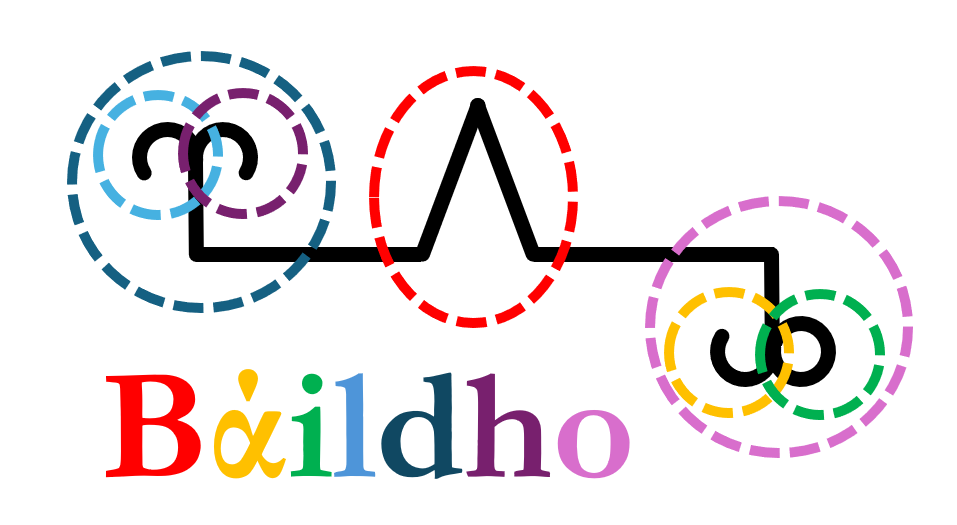
This site presents a digitized version of the Universal Language of John Wilkins, as described in his An Essay Towards a Real Character, and a Philosophical Language of 1668.
For possibly the first time in three-and-half centuries, this site makes it possible to look up every word in the text, to see its written form, and to hear it pronounced. To get started, visit the Dictionary page. For more information on the Essay and this digitization project, read on.
John Wilkins (1614-72) was a polymath, who helped to found the Royal Society, served as Bishop of Chester, and wrote about prayer, hieroglyphics and cryptography, and life on the moon.
The Essay has two modest aims: first, to categorize of the full range of things in the world (from beetles to metaphysical categories); second, to create of a new language to express them—so that the words themselves would reflect the things they represented. To use an example cited by Jorge Luis Borges, de means element, deb means the first of the elements (fire), and deba means the first type of fire (flame). Wilkins also developed "real characters" to represent each word, which were constructed in a similar way.
Despite these grand ambitions, the new theories of John Locke and further advances in the physical sciences soon made the Essay seem dated and irrelevant. Nevertheless, it remains a fascinating glimpse into the 17th century English mind.
For more information on Wilkins' categorization scheme and language, please see these slides, which are a shortened version of a conference presentation that I gave at "On Digital Pasts and Digital Futures," California State University Long Beach, in April 2023.
See the Resources section below for more background on the text.
On the Dictionary page, you may select any of the 18,000+ words listed in the Essay, so see how they are formed in real characters and to hear their pronunciations. The page also shows where the word appears in the classification scheme and the printed text, as well as providing dictionary definitions. Since the digital dictionary only includes words that appear in the Essay, you won't find "telephone" or "communism."
The Additional Forms page presents the thirty-six variations that Wilkins describes for every word (see the middle of page 443 in the original text): concrete/abstract, substantive/adjective/adverb, neutral/active/passive, and singular/plural.
The Organization page presents the relationships between the forty genera that structure the text (reproducing the "General Scheme shown" on page 23).
The Synopsis page reproduces the foldout table (the "Synopsis") that appears between pages 442-443 in the text. However, there are two issues: first, the published Synopsis does not include every entry, and there are numerous differences with the rest of the text. These errors are corrected on this site.
The Real Characters page presents all 3,000+ entries in the Essay, providing the word in English, its phonetic pronunciation, and its form in real characters, for every genus. The grammatical particles are also shown.
The Writing the Real Characters and Spoken Language pages provides guides to writing and pronouncing the words, showing their components, and summarizing the rules described in the text.
The Scolar Press published a facsimile of the Essay in 1968, which is held at many university libraries. A full PDF scan of the Essay is available on Archive.org, from the Lyon Public Library. There are at least three facsimiles of the published text on Google Books:
Of these, that of the National Library of the Czech Republic is generally the easiest to read. Note that the published synopsis (between pages 442 and 443) is either incomplete or missing from these versions; a scan of these pages is available here.
The text of the Essay has been digitized by the University of Michigan Library. (This project would not have been possible without this enormously useful resource.) Finally, a combined transcription and scan exists on Wikisource, but as of early 2026, this version is incomplete.
Surveying the academic literature, Andrade and Emery provide short descriptions of the contents of the Essay. Maat, Eco, Clauss, Lewis (2012) and Slaughter provide lengthier and more detailed analyses (I particularly enjoyed Eco's text). Fleming discusses the Essay as a form of early database (a topic Eco briefly addresses as well). Markley and Tillery discuss the political implications of the text. For biographical information on Wilkins' life, see Davies; for his organizational dispute with John Ray, see DeMott; and for the process of publishing the Essay, see Lewis (2002).
[1] Breaking down the character, “Bα” corresponds to the first genus, which appears in the middle of the character. The accented “ά” indicates the plural modification, shown by a hook at the right. The inserted “i” indicates that this is an adverb, shown by a loop on the right. The inserted “l” indicates that this is the active form, shown by the hook at left. The “d” indicates the second difference, corresponding to the upward bend on the left side. The inserted “h” indicates the abstract sense, also shown by a hook at left. Finally, the “o” indicates the fifth species and corresponds to the downward bend on the right side. This figure (without the plural) appears in the eighth row of the sixth column in the lower table in the last page of the synopsis.
Created by Aidan Wakely-Mulroney

© All rights reserved, May 2026.